Cloud computing delivers on-demand computing services—like storage, databases, software, and analytics—over the internet, letting users access powerful IT resources from remote data centers instead of managing their own physical hardware. It offers flexibility, scalability, and cost savings by providing resources as needed, often on a pay-as-you-go basis, enabling faster innovation and efficient operations for businesses and individuals. Common examples include Google Drive, iCloud, and Netflix, and services are categorized as IaaS, PaaS, or SaaS.
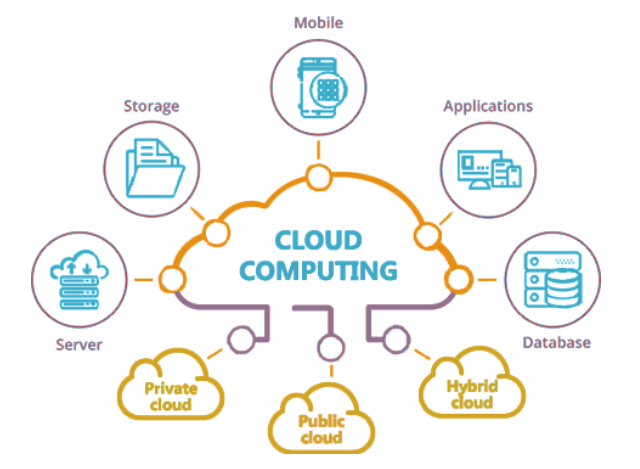
Key Concepts
- The Cloud: A metaphor for the internet and the vast network of remote servers, storage, and applications managed by providers like Amazon (AWS), Microsoft (Azure), and Google Cloud.
- On-Demand: Resources are available instantly and can be scaled up or down as needed, without upfront hardware investment.
- Pay-as-you-go: Users typically pay only for the services and resources they consume.
Main Service Models
- Infrastructure as a Service (IaaS): Provides fundamental computing resources like servers, storage, and networks (e.g., Amazon EC2).
- Platform as a Service (PaaS): Offers a platform for developers to build, run, and manage applications (e.g., Google App Engine).
- Software as a Service (SaaS): Delivers ready-to-use software applications over the internet (e.g., Salesforce, Microsoft 365).
Types of Cloud Deployments
- Public Cloud: Services offered by third-party providers over the public internet.
- Private Cloud: Infrastructure dedicated to a single organization.
- Hybrid Cloud: Combines public and private clouds.
Benefits
- Cost Savings: Reduced need for capital expenditure on hardware.
- Scalability & Flexibility: Easily adjust resources to meet changing demands.
- Accessibility: Access data and apps from anywhere, on any device.
- Reliability & Security: Providers offer robust infrastructure and security.